1. Industry background and traditional site management pain points
In the tide of new energy transformation, photovoltaic power plants in high-altitude mountains and complex terrains have ushered in large-scale development. However, due to the widespread characteristics of vast areas, scattered locations, and rugged terrain of mountain photovoltaic projects, the traditional purely manual or unified construction management model is facing huge technical shortcomings.:
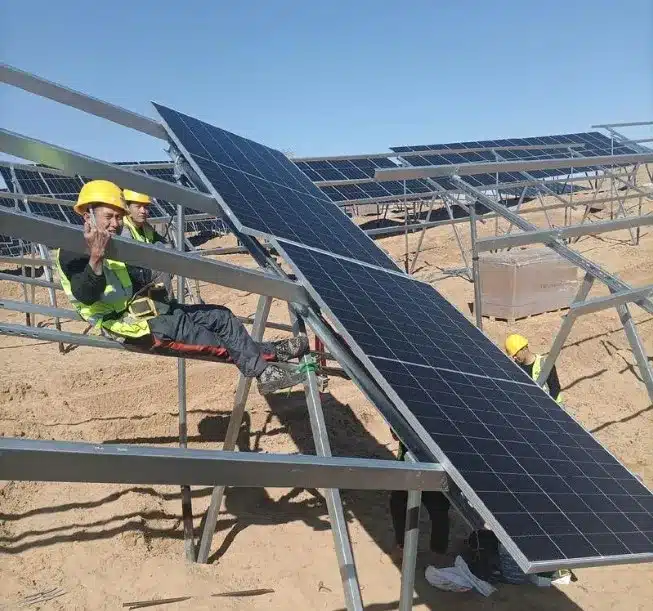
- The operating environment is harsh and the safety risk is high:Some projects are in a high-altitude, low-oxygen environment, and large-scale construction in the wild can easily cause health hazards for personnel; In addition, the assembly of high-altitude photovoltaic panels and long-distance inspections in the wild are at high risk of falling, and it is difficult for manual inspections to capture illegal operations and safety protection violations in real time and around the clock. Behavior.
- Material transfer and installation efficiency is limited:Monolithic photovoltaic modules are generally heavier and rely on pure manual handling and alignment on steep slopes. Not only is it time-consuming and laborious, the alignment accuracy is poor, and it is easy to produce rework and repair, and the overall construction cycle can be easily delayed.
- Extensive management of on-site construction machinery:There are many and mixed excavators, cranes, and engineering transportation vehicles owned by the construction site. Its specific location, actual operating working hours, and actual fuel consumption data are difficult to accurately grasp, and there are widespread scheduling disconnections such as false reporting of working hours, abnormal oil theft, or idle equipment.
- Fire hazards and environmental warnings lag behind:The mountainous wild is extremely vulnerable to fire hazards caused by vegetation and climate. The coverage of manual inspections is narrow, the frequency is low, and the abnormal risk upload link is long, which often leads to missed golden time for emergency response.
2. Four intelligent core business modules
In order to break the safety and efficiency bottleneck of traditional photovoltaic construction sites, this plan is based on“Intelligent Special Equipment + Internet of Things, Internet of Things Sensors + Cloud Digital Integrated Management Platform”It has launched four complete sets of core hardware and software units to fully cover the life cycle of photovoltaic projects from mechanical control, automated assembly, long-distance material air transportation to global safety inspection.:
(1) Refined positioning of construction machinery and oil volume and oil efficiency monitoring system
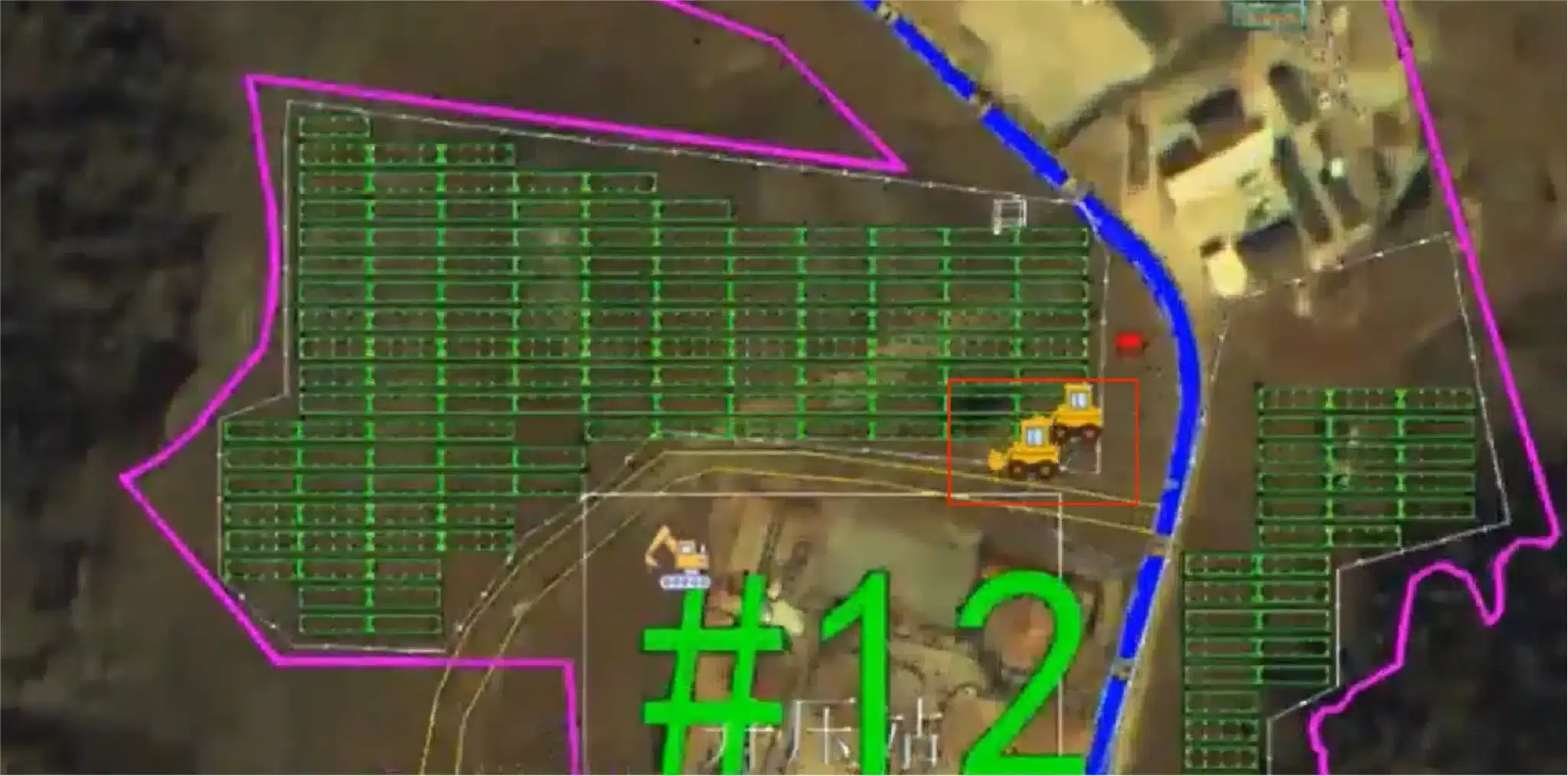
The system consists of an intelligent positioning terminal, a wireless non-contact oil level monitor, and a dynamic attitude sensor. The hardware adopts non-intrusive installation, does not change the circuit and oil circuit of the original vehicle, and is suitable for all kinds of special-shaped construction machinery and taxi vehicles.
- High-precision positioning and trajectory tracking:Using high-precision dual-mode positioning technology, the location distribution and movement history of all construction machinery are displayed in real time, which significantly reduces the waiting time of vehicles and dispatching response time, and greatly improves the comprehensive utilization rate of machinery.
- Fine control of micron-level oil volume:High-precision dynamic oil volume collection, automatic generation of daily fuel consumption curve, the system intelligent capture of oil pipe leakage, abnormal oil leakage, oil theft incidents, reduce the overall fuel cost of the project.
- AI Intelligent working Time accounting Algorithm:Based on multi-dimensional in-depth algorithms such as engine speed, fuselage vibration, and spatial attitude, it automatically determines whether the machinery is in a state of “real operation”, “idling waiting” or “driving and moving”, fundamentally eliminating false working hours and improving effective operating output.
- Stable operation under extreme operating conditions:The full set of hardware has IP67 high dustproof and waterproof rating, low power consumption and long-lasting standby, and can still send and receive data stably in high sand, dust, high and low temperature plateaus and desert environments.
(2) Photovoltaic module automated crawler installation engineering vehicle
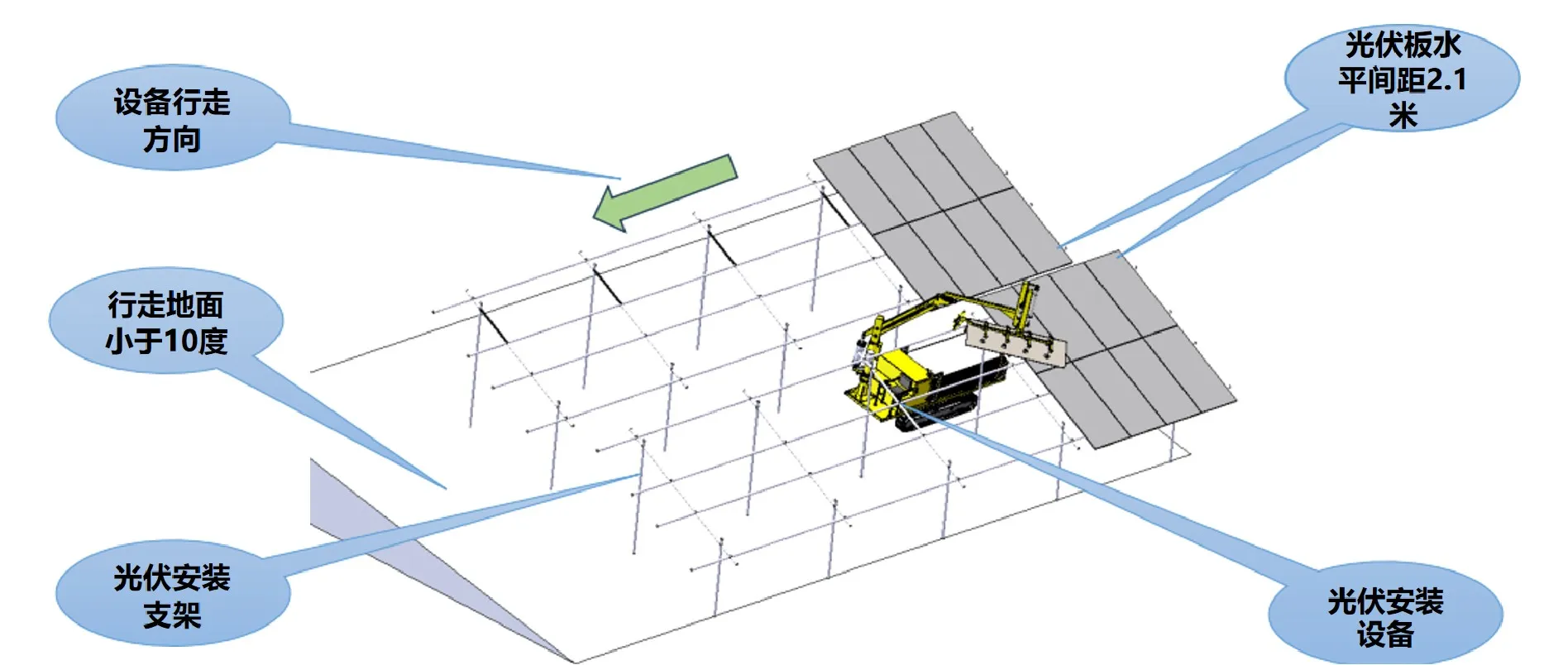
It adopts a special crawler chassis with strong climbing ability and is perfectly adapted to steep mountain conditions. The body integrates a hydraulic stepless speed-regulating lifting platform, a multi-joint vacuum suction cup robotic arm, and a layered material/tool intelligent warehouse to realize fully automatic assembly of photovoltaic panels.
- Safe lifting and efficient operation:The smooth hydraulic lifting cooperates with the all-round perimeter safety fence, completely eliminating the cumbersome scaffolding construction process, so that the efficiency of aerial work can be doubled.
- High-precision automatic alignment laying:Using a vacuum suction cup set and a visual laser correction system, the installation accuracy of photovoltaic panels can be controlled at the millimeter level, greatly reducing manual secondary handling and alignment errors, and the comprehensive laying speed is several times higher than the traditional mode.
- Anti-lost management of intelligent tools:The built-in tool positioning and identification system quickly realizes the registration of access to tools and abnormal reminders, so as to avoid the risk of lost parts at high altitude and random stops.
(3) Heavy-duty high-altitude photovoltaic panel carrying uav
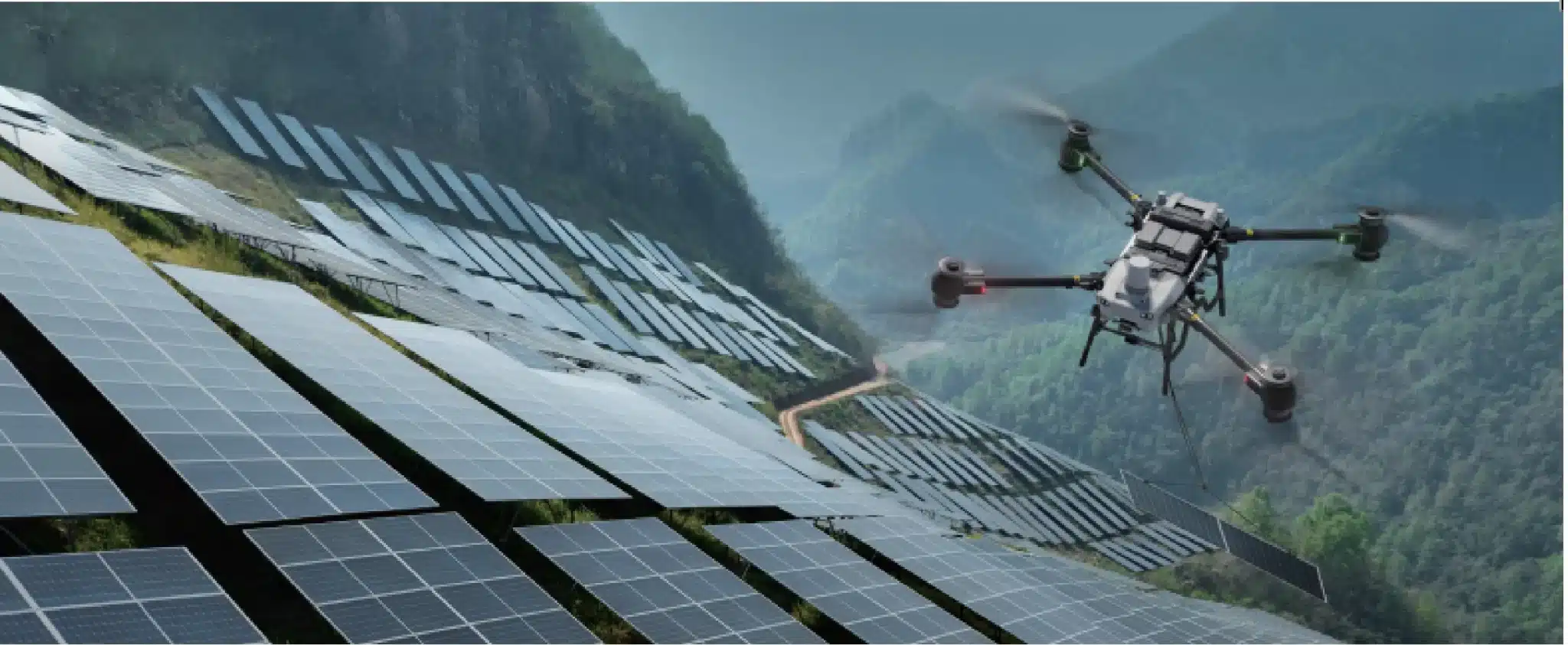
A special high-altitude material logistics plan designed for complex areas such as cliffs, steep slopes, and rocky areas that are impassable to mountain vehicles.
- Super carrying and fast transportation:It supports high load, stable suspension and multiple transportation of several standard photovoltaic panels in a single flight. Originally relying on manual labor to climb the transportation distance, the drone can fly in just a few minutes.
- Multi-dimensional obstacle avoidance in plateau environment:It has the performance of strong wind resistance and high altitude operation. The whole machine adopts dust-proof and rain-proof design. It has a built-in omnidirectional vision and infrared safety obstacle avoidance system, which can accurately identify tower cranes and tall vegetation to prevent collision damage.
- Flexible positioning and precise delivery:Cooperate with a special four-point flexible spreader to prevent the plate from bumping, support accurate and safe laser positioning, and minimize the secondary finishing time of ground operators.
(4) AI Multispectral intelligent Inspection Drone
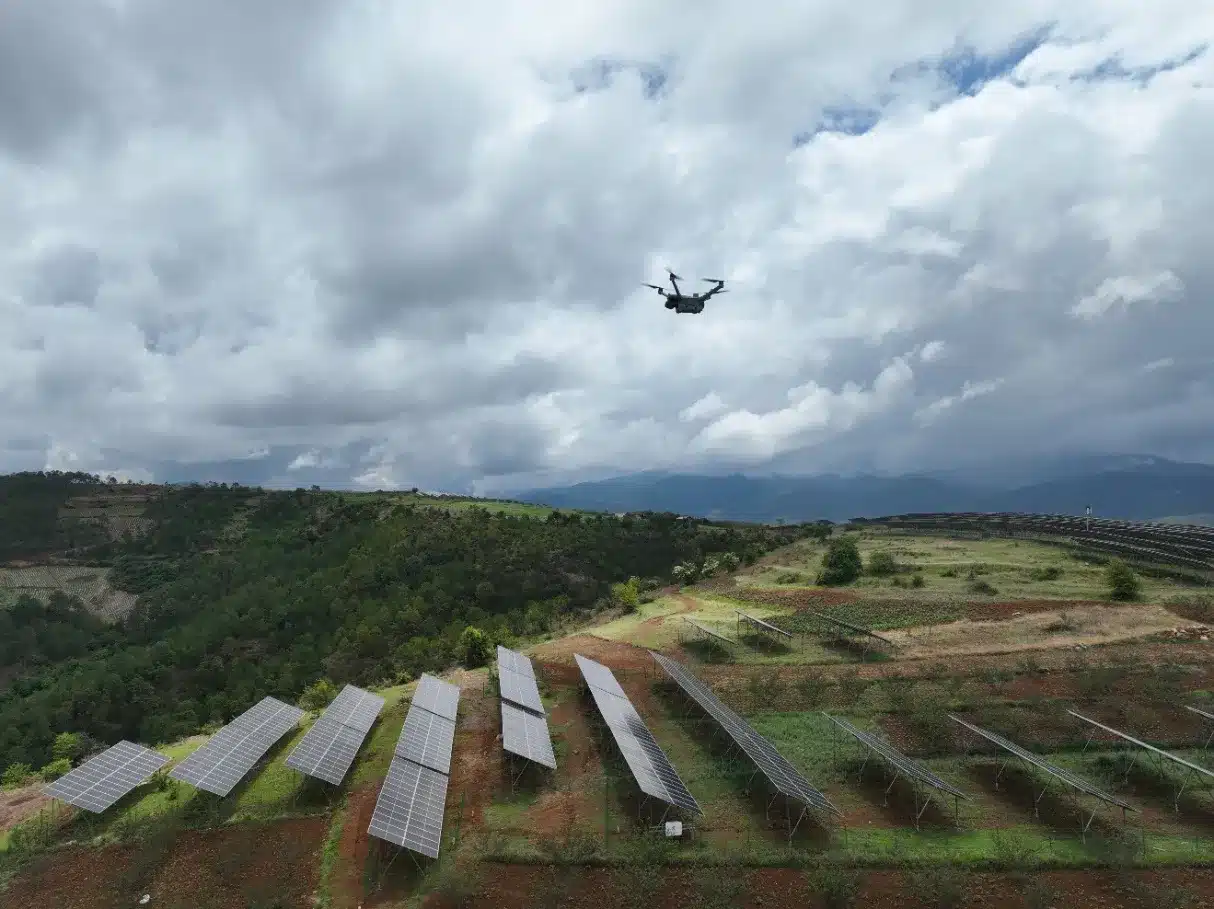
Equipped with a dual-channel lens of infrared thermal imaging and high-pixel visible light, it integrates the early warning of hidden dangers of mountain forest fires, behavioral safety supervision of construction areas, and the investigation of hidden dangers in the whole area of photovoltaic arrays.
- Full coverage and wide-area flight:A single flight can cover a large area of photovoltaic arrays, basically eliminating blind spots in the mountains, and the efficiency of daily inspections is extremely high, reducing the intensity of safety supervision personnel in the field.
- Millisecond open flame infrared warning:The high-precision infrared temperature measurement algorithm can accurately capture and identify hidden smoke and surface fires at a long distance. The AI judgment accuracy rate is high, and major fire hazards can be intercepted in advance.
- Capture of unsafe behavior of personnel:Automatically capture and analyze pictures of operators not wearing safety helmets in accordance with regulations, crossing illegally at high altitude, etc., and push warnings to the background in real time to form a management deterrent.
3. Cloud big data integrated management platform
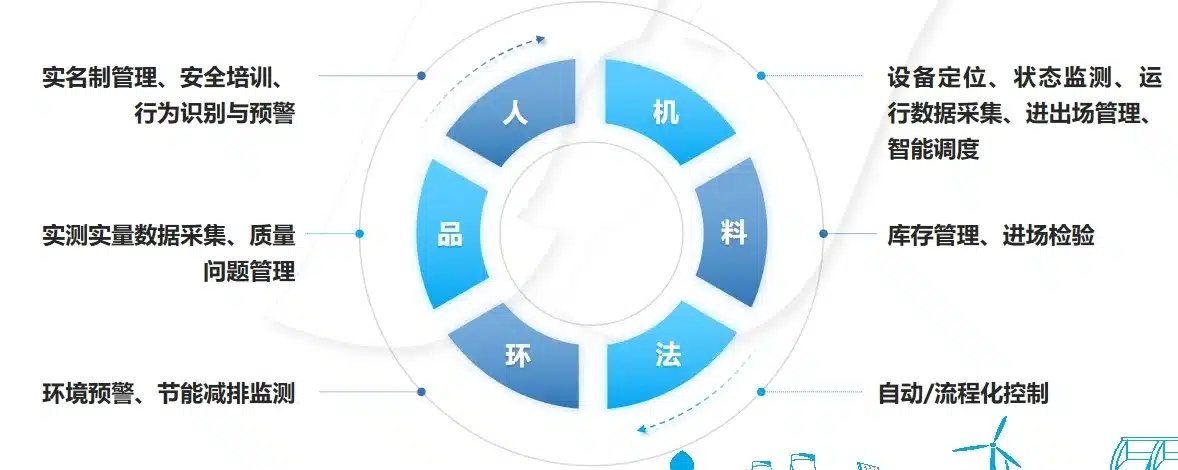
The cloud platform comprehensively opens up the five on-site data links of “people, machines, materials, methods, and environment”, completely eliminating the “information silos” of traditional construction sites.:
- Panoramic data visualization large screen:The overview map, real-time mechanical locations, dynamic construction zoning, uav trajectory and multi-level early warning information are merged into the same large screen, and the data is visually presented.
- Intelligent integrated reporting system:It automatically outputs various statistical charts such as equipment utilization rate, team working hours, fuel statistics, and closed-loop inspection of defects to provide management with a digital decision-making basis.
- Wireless lightweight and rapid deployment in the field:The full set of hardware relies on wireless security protocols to complete network transmission. There is no need for large-scale and high-cost laying of exposed lines on wild mountain sites, and it can implement digital retrofitting and transformation of new projects and existing old construction sites at low cost.
4. Applicable project scenarios
This smart construction site platform solution is widely used inCentralized photovoltaic in mountainous areas, large-scale ground photovoltaic in deserts, and complex photovoltaic power plants in hilly areasAnd other types of new energy engineering projects. The platform runs through the entire construction period of photovoltaic projects, and solves core pain points such as extensive management of construction machinery, difficult component handling and laying, long-distance transportation risks, and blind spots for global safety inspections in one stop. It is an ideal solution for new energy power plants to move towards intelligent upgrading.
Landing case: The implementation effectiveness of the 160MW mountain photovoltaic project in Baiwu, Yanyuan, Sichuan
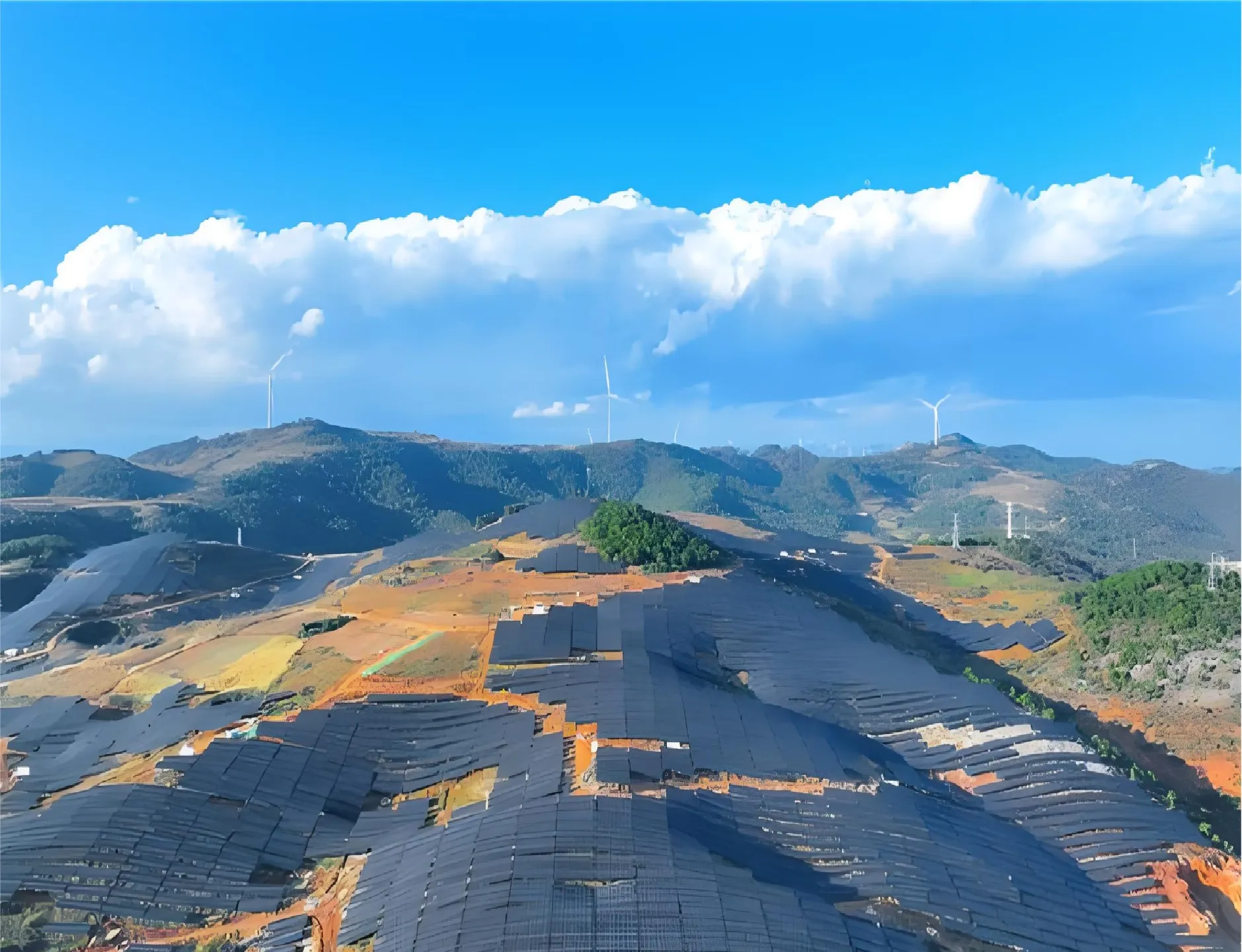
Construction machinery management: The efficiency of equipment scheduling has been greatly improved, fuel consumption has been reduced by 22%, and the problem of fraud in manual working hours has basically been eliminated.;
Photovoltaic construction: The efficiency of plate installation and transportation is increased by 3-4 times, which greatly reduces the heavy physical labor at high altitudes and reduces the risk of altitude sickness and falling from high altitudes for workers.;
Safety control: real-time early warning of fire and personnel violations, and no major safety accidents occurred during the construction cycle of the project.;
Standardization of project results: Relying on the practice of this project, two papers, "Research on the Installation and Commissioning Technology of Electrical Equipment for Photovoltaic Engineering Projects" and "Research on the optimization of Cable Laying and Connection Technology for Photovoltaic Engineering Projects", were both accepted and published by the national journal "Power Equipment Management".