


Product introduction: Content hides the old pain points of outbound operations: relying on people to stare, relying on the mouth to shout system composition and working principle ……
For the export of crude oil at sea, it looks like the ship is leaning against the ship and the pipe is facing the pipe. In fact, the most worrying thing is the cables. The mooring force of the FPSO mooring has been changing during the entire operation process of berthing the tanker, starting the pump for external transportation, and releasing the cable from the mooring. Once the force of the cable is abnormal, the operation will be interrupted if it is light, and an accident will be caused if it is heavy.

The FPSO external transmission tension monitoring device of micro-technology FPSO is specially designed to monitor these cables. The complete set of devices installs the wireless terminal on the lifter, and relies on wireless transmission to send the cable tension and bow direction data to the ship operators in real time. The mooring captain and ship operators can see the dynamics of the cable and the orientation of the FPSO ship at any time. Once the tension or compass data crosses the set safety valve value, the system immediately alarms and records the data, which can be checked afterwards. This set of equipment is also called mooring rope tension monitoring system and cable tension monitoring system.
In the past, for a long time, the tension of the cable relied on manual monitoring. Someone will stay on the deck to watch the pull force, keep an eye on the distance, and then report the real-time data to the captain of the tanker. The captain manipulates the ship and adjusts the distance based on the reported numbers.

Communication basically depends on walkie-talkies. There is a delay one after another, the sea surges together, and the wind changes. The force on the cable may pass the safe value in an instant. When the news reaches the driver's desk, it is already half a beat slower. The single and backward means of communication has always been the biggest safety hazard in oil extraction operations.
In view of this pain point, micro-technology has provided CNOOC with a technical solution for tension monitoring of large cables, which has improved the safety and reliability of oil extraction operations.
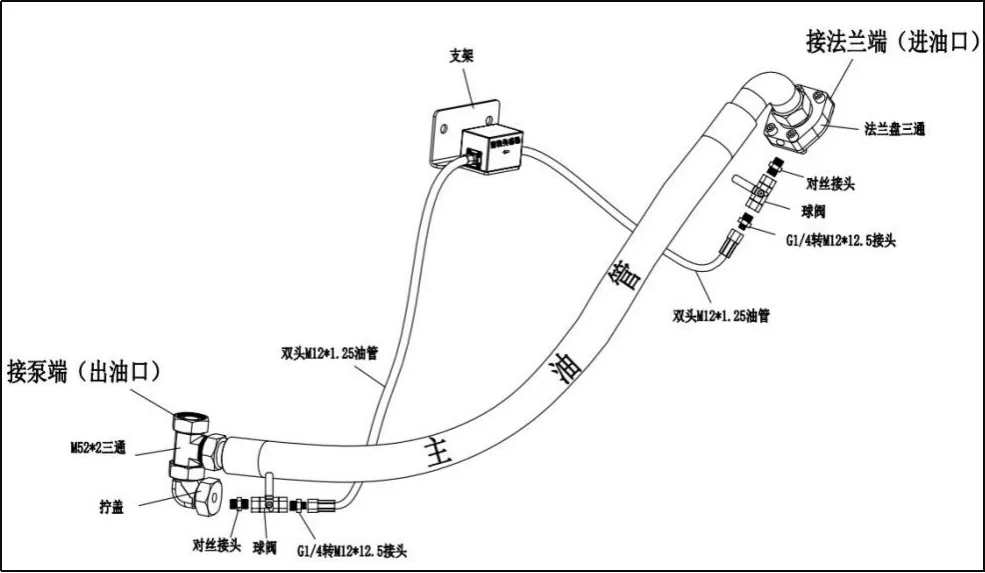
The complete system consists of several parts: tension integrated display unit (316L material, DC24V/35W, IP66 protection, explosion-proof grade EXDBBT4), detection display unit (DC24V, IP65), data transmitter (RS485, DC24V, IP66, EXDBBT4), data receiving terminal (RS485, AC220V, IP65).

The working principle is not complicated. The tension sensor is responsible for measuring the force of the cable, and the compass provides the bow direction of the ship. The two signals are gathered in the main box, and then sent to the handheld terminal on the tanker through the wireless module. When the ship operator stares at the screen, he can see the current tension, rated tension, ratio, bow direction and temperature at the same time, whether the compass communication is normal, whether the tension has exceeded the limit, and the interface is clear.
Calibration is also effortless. The system supports weight clearance, weight standard zero, and counterweight calibration. Under normal circumstances, only standard zero and then a counterweight can be calibrated for normal use.

This system is already in actual operation on the offshore platform. The signal processing box and wireless module are installed in the FPSO stern external transmission operation area, the explosion-proof shell is adapted to the hazardous area of the platform, and the antenna, box, and line are all arranged in accordance with the requirements of the marine environment.

The construction period was just in time for the epidemic. Weite engineers strictly implemented the epidemic management policy of the work area, the testing, the isolation and isolation, and completed all the installation and commissioning tasks on time and according to the quality.

At the end of the project, the engineer was about to return to land by helicopter, and the person in charge of the site was still thanking him when he said goodbye. The exact words are: the interface of the tension safety monitoring system of the large cable is clearly displayed, and the parameters are clear at a glance; it can monitor the tension of the large cable and the bow direction of the ship in real time, and give the staff early warning and alarm in a timely manner, so that the crude oil export operation is more confident.
For people who operate on the front line, the four words ”I have a bottom in my heart" are more real than any parameter.

Weite has been a qualified supplier of CNOOC since 2011. After replacing the original German products and services, Weite has been deeply engaged in the field of crane safety. Today, its products cover 217 offshore drilling platforms in the Bohai Sea, Yellow Sea, East China Sea and South China Sea.

From the initial single product of the torque limiter of offshore cranes to the ability to provide complete solutions to the pain points of complex and changeable industries, it depends on the effort saved by one on-site project after another. The customer's affirmation is the confidence of Weite's continuous innovation in the field of lifting safety.
Next Article:
24-Hour Service Hotline: 0717-6922999 WeChat: 13972023522 Email: technical@wtauserver.com Address: No.6 Gangcheng Road, Yichang Area, China (Hubei) Pilot Free Trade Zone
Copyright © 2026 Wtau Technology Co., Ltd. All Rights Reserved. ICP License No.: E ICP 12004023-1