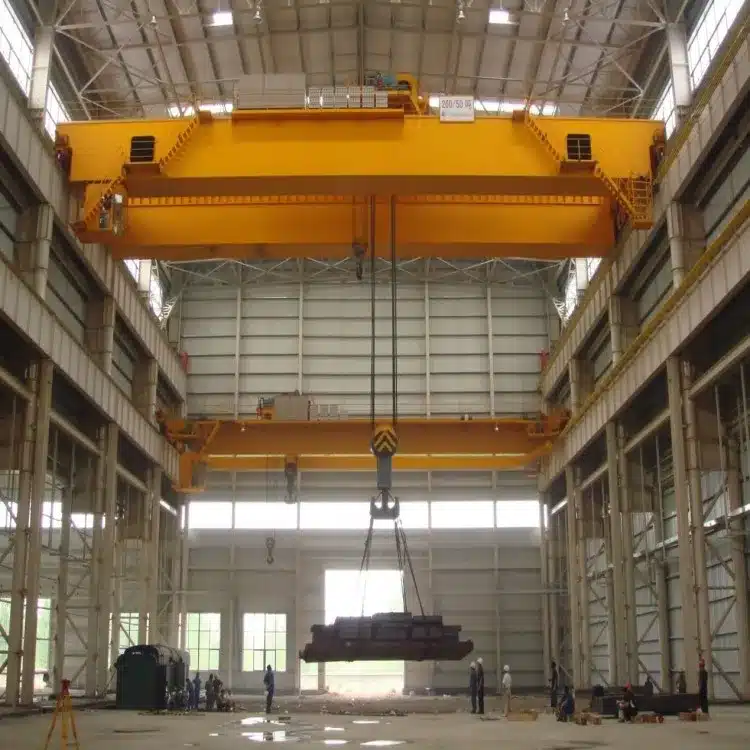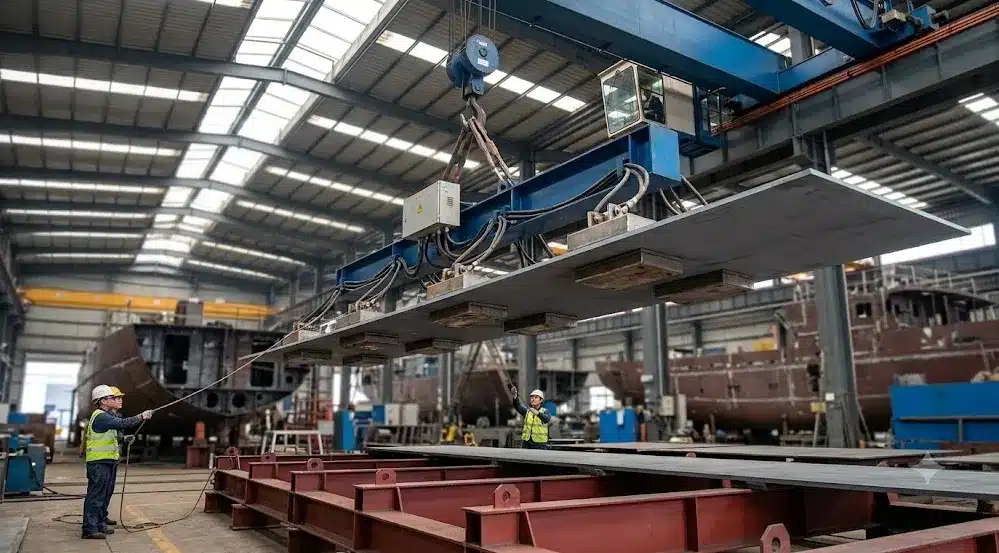



Metallurgical cranes are widely used in industrial scenes such as steel smelting, metal processing and metallurgical production, and undertake important tasks such as ladle lifting, material transfer and production line auxiliary operations. Due to the characteristics of high temperature, high load, and continuous operation in the metallurgical production environment, the key components of the crane are in a complex working state for a long time, which puts forward high requirements for the safety, reliability and stability of equipment operation.
The operation and maintenance of traditional cranes mainly rely on manual inspections, regular inspections and post-failure maintenance. In the face of changing operating conditions during the operation of the equipment, relying solely on manual inspection, there may be problems such as discontinuous monitoring, untimely detection of anomalies, difficult to trace the cause of the failure, and large maintenance workload.
Especially in the process of ladle hoisting, hoist mechanism operation and key carrying components, once abnormal wear, structural stress, wire rope damage or mechanical operation failure occurs, it is necessary to find out in time and take corresponding measures.
In order to improve the level of equipment management, buildIntelligent operation and maintenance management system of Metallurgical crane, The combination of online monitoring, video monitoring, fault diagnosis, data analysis and operation and maintenance management has become an important direction to promote the transformation of crane operation and maintenance from traditional manual inspection to digital and intelligent management.
The intelligent operation and maintenance management system of Micro-special metallurgical crane focuses on equipment operation safety and daily maintenance needs. Through the deployment of a variety of monitoring sub-modules, it comprehensively monitors the operating environment of personnel, key mechanical components, structural status and driver operation behavior, and realizes centralized data display, abnormal information management and equipment management through the intelligent monitoring operation and maintenance platform.Status analysis, to provide technical support for the safe operation and daily operation and maintenance of metallurgical cranes.
The intelligent monitoring operation and maintenance platform is the core component of the intelligent operation and maintenance management system of metallurgical cranes. It is responsible for integrating the data and information of different monitoring sub-modules to form a unified equipment monitoring and operation and maintenance management interface.
In traditional equipment management, video surveillance, mechanical condition detection, and fault information may be dispersed in different systems. Managers need to view various types of data separately in order to understand the overall operation of the equipment. By building a unified intelligent monitoring operation and maintenance platform, decentralized monitoring information can be centrally managed, reducing information switching and manual aggregation.
The platform can be configured on-site to centrally display the crane's operating status, monitoring data of key components, video screens, abnormal alarms and fault diagnosis information. Managers can understand the operation of equipment through the platform, pay attention to abnormal information in a timely manner, and carry out follow-up inspections and maintenance based on monitoring data.

In terms of equipment management, the intelligent monitoring operation and maintenance platform can play a role in the following aspects:
Through the intelligent monitoring operation and maintenance platform, enterprises can gradually establish a unified metallurgical crane equipment management system, reduce the dependence on decentralized information and manual experience, and improve the visualization and standardization of equipment operation and management.
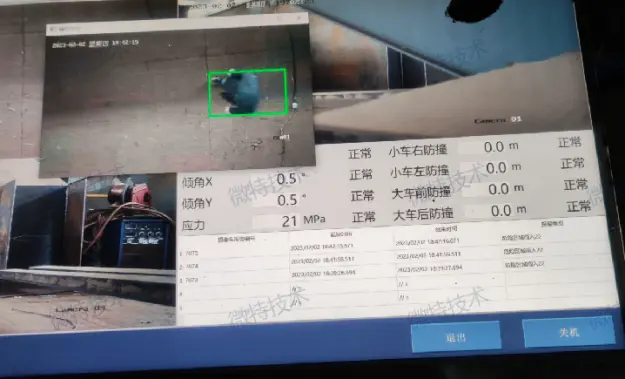
The metallurgical production site is densely equipped and the operating environment is complex. There may be situations such as personnel entering and cross-operating in and around the crane operation area. If personnel enter a hazardous area that is not suitable for staying, it may increase the safety risks during the operation of the equipment.
The personnel intrusion prevention monitoring module can be combined with the actual situation on the site and use video recognition, regional monitoring or other applicable detection technologies to monitor the entry of personnel in the set area. When the system recognizes that a person has entered a preset risk area, it can issue an alarm or prompt message according to the on-site configuration to remind relevant personnel to check and deal with it in time.
This module helps managers to keep abreast of personnel activities in key areas in a timely manner, strengthen the safety management of crane operation areas, and provide auxiliary support for on-site safety control.
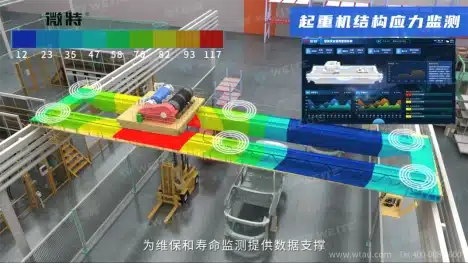
In the process of lifting heavy objects and frequent start and stop of metallurgical cranes, the main bearing structure will be subjected to varying degrees of load. After long-term operation, the force state of the structure and its changing trend are important contents that need to be paid attention to in equipment safety assessment and maintenance work.
The crane stress monitoring module can monitor the stress changes of the specified structural parts through corresponding sensors and data acquisition devices, and transmit the collected data to the intelligent monitoring operation and maintenance platform.
Managers can combine equipment operating conditions, historical monitoring data and set judgment conditions to understand the force changes of key structural parts. When the monitoring data is abnormal or the set early warning conditions are reached, the system can provide corresponding prompts to assist in further inspection.
Through continuous monitoring of stress changes in key parts, it can provide a data basis for structural condition analysis, abnormal working conditions investigation and preventive maintenance, and help enterprises carry out more scientific metallurgical crane structural safety management.
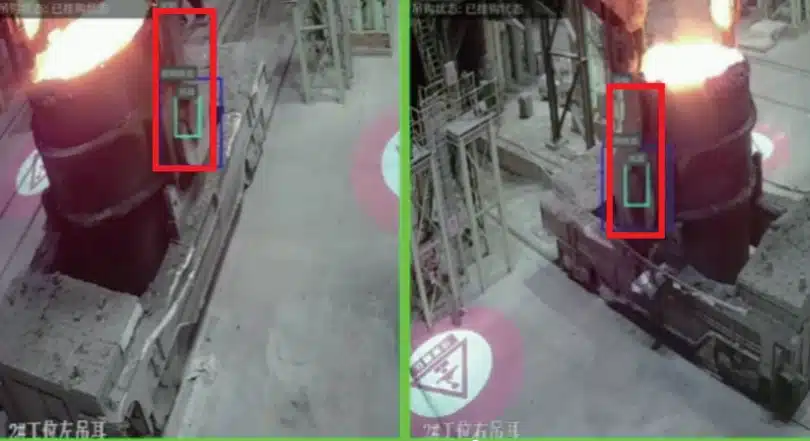
Ladle hoisting is an important operation link in the metallurgical production process, and the status of the ladle trunnion and its related hoisting stations is directly related to the safety of the operation. Due to the complex on-site environment and relying only on manual observation, it is difficult to continuously grasp the on-site situation during all operating hours.
The video monitoring module of the ladle trunnion station performs video monitoring of the relevant stations and key operating areas of the ladle trunnion by deploying video monitoring equipment in appropriate locations. Managers can view on-site pictures through the intelligent monitoring operation and maintenance platform to understand the relevant conditions in the operation process.
Combined with the actual needs of the site, video monitoring can be used to assist in observing the ladle lifting process, the station environment and the status of related components, and provide a reference for abnormal situation review and operation process traceability.
This module integrates on-site video information into a unified management platform, which helps to improve the level of visual management of key operating areas, and provides support for the safety management of key lifting links of metallurgical cranes.

During the long-term operation of metallurgical crane wheels and hub-related components, they will be affected by factors such as load, friction, operating environment and frequency of use, and may experience wear or other state changes. Failure to detect related problems in time may affect the stability of equipment operation and increase the workload of subsequent maintenance.
The wheel hub wear monitoring module can detect the wear status of designated wheels or related components according to the equipment structure and on-site installation conditions. The system records and displays the monitoring results to help the operation and maintenance personnel understand the changes in the status of the components, and combines the operating time of the equipment, maintenance records and on-site inspections to determine whether further maintenance is required.
By integrating wheel hub wear monitoring into the intelligent operation and maintenance management system of metallurgical cranes, enterprises can strengthen the condition management of key mechanical components, and gradually shift from relying solely on regular inspections to carrying out maintenance work in combination with actual conditions.
It should be noted that the specific monitoring methods and identifiable wear types should be determined according to the sensors, testing equipment and technical solutions used on the site.
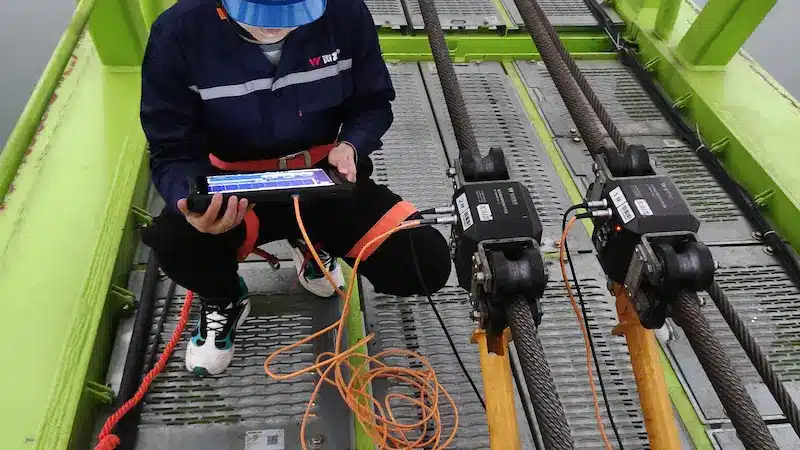
Wire rope is an important carrying component of the lifting mechanism of metallurgical cranes, and its operating status is closely related to equipment safety. During long-term use, the wire rope may have problems such as broken wire, wear, deformation, corrosion and internal damage. Some injuries are difficult to fully identify only through daily visual inspections, so inspections need to be carried out in combination with regulatory requirements and applicable testing methods.
The wire rope damage detection module can be configured according to the site, and the applicable wire rope detection device can be used to detect the relevant status of the wire rope, and the detection data or abnormal information can be connected to the intelligent monitoring operation and maintenance platform.
Operation and maintenance personnel can combine the test results, wire rope usage, historical inspection records and related safety requirements to assess whether further inspection, maintenance or replacement is required.
Integrating wire rope damage detection into the intelligent operation and maintenance system will help strengthen the status management of wire rope, improve the timeliness of abnormal discovery, and provide technical support for the daily inspection and safety maintenance of the lifting mechanism.

The hoist mechanism is an important part of the lifting system of metallurgical cranes. During the operation of the equipment, if the winding state between the wire rope and the reel is abnormal, skipping rope, chaotic rope, etc. may affect the normal operation of the equipment and bring additional risks of mechanical damage.
The hoist skipping rope monitoring module can monitor the relevant operating status of the reel and wire rope according to the structure and technical configuration of the on-site equipment. When the system detects an abnormal situation that meets the set conditions, it can send an alarm or prompt message to the monitoring platform to facilitate timely verification by operators and operation and maintenance personnel.
By monitoring the operating status of the hoist, enterprises can pay more timely attention to abnormal wire rope winding, reduce the limitations of relying only on manual observation to find problems, and provide auxiliary guarantees for the stable operation of the lifting mechanism.
The specific detection capability depends on the configuration of the monitoring device, the detection range and the on-site installation conditions.
Metallurgical cranes are composed of multiple systems such as lifting, operation, braking, and electrical control. Equipment failures may involve mechanical components, electrical components, operating parameters, or operating conditions. Traditional troubleshooting often requires maintenance personnel to combine on-site inspections and personal experience to analyze it item by item, and the troubleshooting process may take a long time.
The fault diagnosis module can integrate equipment operation data, related monitoring information, alarm records and historical fault information, and assist in judging abnormal states in accordance with the diagnostic rules or analysis models configured by the system.
When the equipment is abnormal, the platform can combine the existing data to display relevant alarm information and status changes, help operation and maintenance personnel narrow down the scope of investigation, and further analyze the possible components or types of failures involved.
For example, when a certain monitoring parameter is abnormal, the operation and maintenance personnel can combine the operating status of the equipment, the monitoring data of related components, and historical records to analyze whether there are problems that require key inspections.
The value of fault diagnosis lies not only in the discovery of abnormalities, but also in providing a basis for subsequent troubleshooting and maintenance decisions. By continuously accumulating equipment operation and maintenance data, enterprises can also continuously improve fault analysis rules and improve the pertinence and efficiency of equipment management.
The driver's operating behavior is one of the important factors affecting the safe operation of the crane. Frequent start and stop, irregular operation, inattention, etc. may increase the risk of equipment operation. Therefore, in addition to equipment condition monitoring, strengthening driver behavior monitoring is also an important part of the intelligent operation and maintenance management of metallurgical cranes.
The driver behavior monitoring module can be configured on-site to monitor the designated behavior in the cab through video monitoring, behavior recognition or related status detection technologies. For abnormal behaviors that the system can identify and comply with preset rules, corresponding prompts or alarm information can be provided.
Managers can combine monitoring records, equipment operation data and on-site management systems to review relevant situations and use them for safety training, operation specification management and risk investigation.
The purpose of driver behavior monitoring is to assist enterprises in strengthening operation process management, rather than completely replacing the on-site safety management system. By integrating personnel behavior information and equipment operation status into a unified platform, it can help enterprises carry out safety management from the two dimensions of equipment and personnel.
With the continuous increase of online monitoring modules for metallurgical cranes, the system will accumulate a large amount of equipment operation data, monitoring parameters, alarm records and historical maintenance data. If this information is only used for real-time display, and there is a lack of unified data analysis and management, it will be difficult to give full play to the value of online monitoring.
The big data software platform aggregates, organizes and analyzes the data of different monitoring sub-modules to provide data support for equipment status assessment, anomaly identification, and operation and maintenance management.
The first is to realize centralized management of multi-source data. Unify and integrate related information such as stress monitoring, wire rope damage detection, hub wear monitoring, hoist skipping rope monitoring and fault diagnosis to reduce the problem of information dispersion between the various systems.
The second is to assist in the analysis of the status of the equipment. According to the system configuration, statistics, comparisons and trend analysis of equipment monitoring data are carried out to help managers understand the changes in key parameters and identify equipment and components that need to be focused on.
The third is to assist in abnormal screening and fault analysis. Combining preset rules, historical data and applicable analysis models, organize and analyze abnormal information to help operation and maintenance personnel prioritize issues that need to be paid attention to, and reduce the work of repeatedly viewing data and manually filtering information.
The fourth is to provide a basis for the inspection plan. Combine equipment status changes, alarm records, and historical maintenance conditions to provide a reference for daily inspection arrangements, key component inspections, and maintenance plans to improve the pertinence of inspection work.
Fifth, accumulate data on the whole life cycle of the equipment. Continuously record information such as equipment operation, abnormalities, inspections, and repairs to provide a basis for subsequent failure recovery, maintenance effect evaluation, and equipment management optimization.
Unified management and auxiliary analysis of monitoring information through the big data software platform can reduce the workload of manually organizing data, screening for anomalies, and summarizing operating conditions, reduce the difficulty and intensity of spot inspection, operation and maintenance, and improve equipment management efficiency.
It should be noted that the specific capabilities of automatic calculation, intelligent analysis, fault prediction, and operation and maintenance recommendations depend on the data access range of the system, the algorithm model, and the actual functional configuration. For abnormal situations that require professional judgment, they should still be confirmed in combination with on-site inspections and relevant technical specifications.
The intelligent operation and maintenance management system of Micro-special metallurgical crane integrates multiple monitoring sub-modules and intelligent monitoring operation and maintenance platforms to integrate equipment condition monitoring, on-site video viewing, abnormal alarm and data analysis into a unified management system. Its application value is mainly reflected in the following aspects.
1. Improve the level of visualization of the operating status of the equipment
By centrally displaying monitoring data, on-site videos and abnormal information of key components, it helps managers to grasp the operation of equipment more intuitively and reduces the management inconvenience caused by the dispersion of information.
2. Improve the timeliness of exception discovery and handling
Use online monitoring and abnormal reminder functions to assist in discovering problems such as personnel entering hazardous areas, abnormal structural stress, wire rope damage, and abnormal hoist operation, and provide support for timely verification and handling.
3. Reduce the burden of manual inspection and data collation
Through automatic collection, centralized display and software analysis of monitoring data, some repetitive data viewing, recording and summary work is reduced, so that operation and maintenance personnel can devote more energy to on-site inspection, troubleshooting and key equipment maintenance.
4. Promote the optimization of equipment maintenance methods
By accumulating equipment operation data and historical fault records, enterprises can optimize the focus of inspection and maintenance arrangements in accordance with the actual situation, gradually improve the pertinence of equipment maintenance, and reduce the limitations of relying solely on fixed cycles and manual experience for maintenance.
5. Provide the basis for equipment safety management and fault traceability
By retaining relevant monitoring data, alarm records and video information, it provides a reference for abnormal situation review, fault cause analysis and subsequent management improvement. The actual traceability ability depends on the data retention cycle, recording range and on-site configuration of the system.
Overall, the intelligent operation and maintenance management system of metallurgical cranes does not simply connect multiple monitoring equipment, but through a unified platform and data analysis capabilities, establishes the link between equipment status perception, anomaly discovery, information aggregation and operation and maintenance processing to help enterprises improve the digital level of equipment management.
When choosing an intelligent operation and maintenance management system for metallurgical cranes, enterprises should conduct a comprehensive assessment based on equipment type, on-site working conditions, key risks and operation and maintenance management needs.
First of all, it is necessary to clarify the equipment and components that need to be monitored, such as crane carrying structures, wire ropes, hoist mechanisms, wheels and ladle lifting related stations, so as to avoid the disconnect between system construction and actual needs.
Secondly, attention should be paid to the integration capabilities of the system, and it should be confirmed whether each monitoring sub-module can uniformly access relevant data to the monitoring platform to realize centralized viewing of equipment status, alarm information and video screens.
Again, we should pay attention to the functions of data analysis and operation and maintenance management, and understand whether the platform supports historical data query, exception record management, trend analysis and related reporting functions, and whether these functions are in line with the daily operation and maintenance process of the enterprise.
In addition, environmental factors such as high temperature, dust, vibration and electromagnetic interference in metallurgical sites should be considered to evaluate the applicability, installation conditions, maintenance convenience and system stability of monitoring equipment.
Finally, the system construction should be combined with the existing equipment management system. Online monitoring can provide an auxiliary basis for equipment inspection and maintenance, but it cannot replace the inspection, inspection, maintenance and personnel safety management work carried out in accordance with the law and regulations.
Through the comprehensive evaluation of monitoring functions, platform integration, data analysis and on-site applicability, enterprises can more specifically choose the intelligent operation and maintenance management plan of metallurgical cranes suitable for their own production needs.
With the development of industrial equipment management in the direction of digitization and intelligence, the operation and maintenance management of metallurgical cranes is gradually changing from the traditional manual inspection to a combination of online monitoring, data analysis and comprehensive management. Model.
The intelligent operation and maintenance management system of Micro-special metallurgical crane takes the intelligent monitoring operation and maintenance platform as the core, through functions such as personnel intrusion prevention, crane stress monitoring, video monitoring of ladle trunnion station, hub wear monitoring, wire rope damage detection, hoist skipping rope monitoring, fault diagnosis, driver behavior monitoring and big data software platform, To help enterprises strengthen the status management of key equipment components and operation links.
Through unified management, centralized viewing, and data-assisted analysis, enterprises can improve the degree of visualization of equipment operation information, pay attention to potential anomalies in a timely manner, reduce the burden of daily inspection and data collation, and provide support for troubleshooting and maintenance decisions.
For metallurgical production enterprises, the construction of an intelligent operation and maintenance management system for metallurgical cranes suitable for the actual needs of the site will help to improve the equipment safety management system, improve the efficiency of equipment operation and maintenance, and provide technical support for the safe and stable operation of production equipment.
Previous: Wire rope flaw detector: Before changing the rope, figure out what it can measure.
Next Article:Monitoring system of bridge-building machine: realize safety monitoring and intelligent management of bridge-building construction »
24-Hour Service Hotline: 0717-6922999 WeChat: 13972023522 Email: technical@wtauserver.com Address: No.6 Gangcheng Road, Yichang Area, China (Hubei) Pilot Free Trade Zone
Copyright © 2026 Wtau Technology Co., Ltd. All Rights Reserved. ICP License No.: E ICP 12004023-1