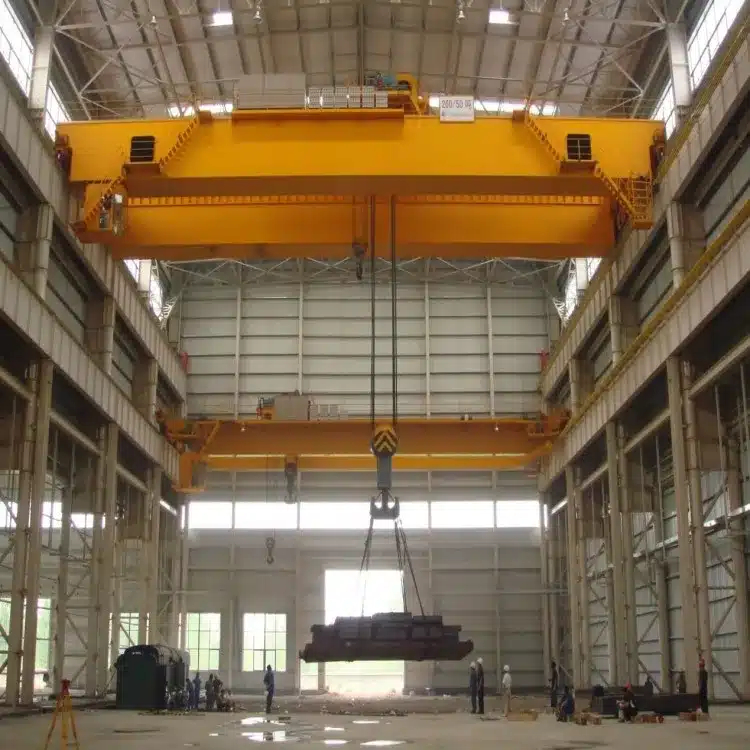
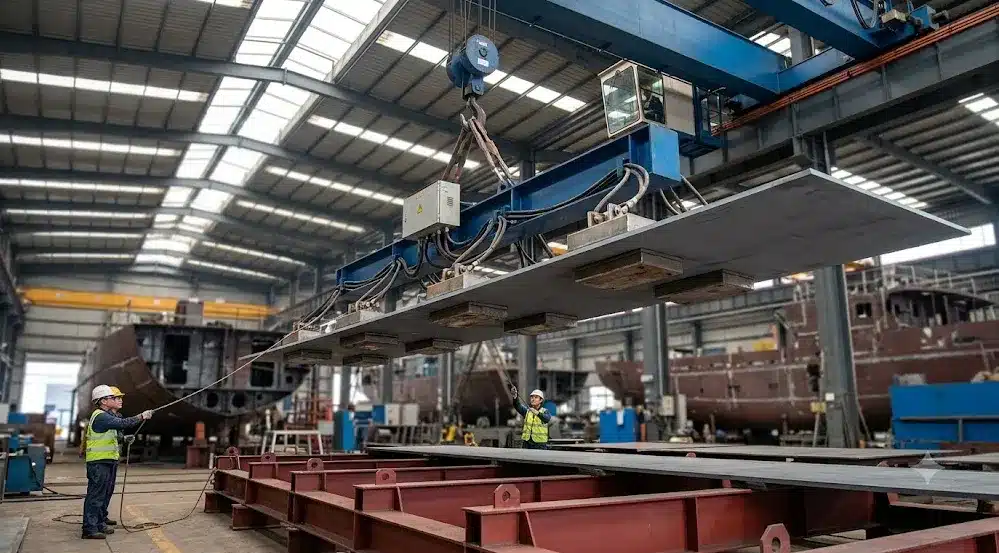
Nowadays, large-scale crane operations are heavily invested in ports, steel mills, construction sites, mines and other places. The old model that traditionally relies on manual inspection and paper-based ledger records for equipment maintenance and troubleshooting has been difficult to adapt to high-frequency and high-load lifting operations.Intelligent operation and maintenance management system for large cranes, is a digital control platform built for heavy-duty lifting equipment such as bridge cranes, gantry cranes, crawler cranes, and port gate cranes. It can monitor the operating status of equipment throughout the process, reduce lifting safety accidents, and reduce post-maintenance expenses. It is just needed equipment for the intelligent upgrading of equipment in the heavy industry. The following is a detailed introduction from the system composition, core functions, main advantages, applicable industries, purchase and installation, and daily operation and maintenance points.
1. What is the intelligent operation and maintenance management system for large cranes?
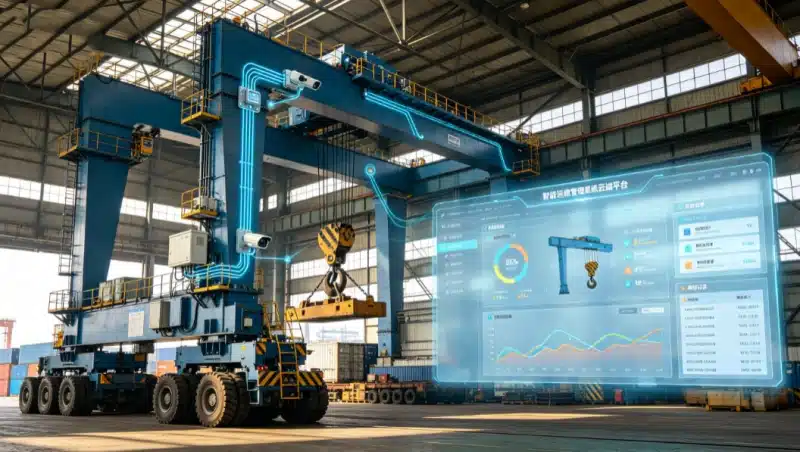
The intelligent operation and maintenance management system of large cranes belongs to a comprehensive control platform that combines hardware and software.
The hardware side relies on various sensors, security monitoring hosts, high-definition cameras, and vibration monitoring modules.、Wire rope flaw detection device, Torque acquisition equipment, real-time collection of crane lifting load, operating stroke, metal structure vibration, motor temperature, limit switch status, wire rope loss data.
The software side is equipped with a cloud management background, a computer client, and a mobile applet. Managers do not need to visit the work site in person to remotely view the real-time working conditions of multiple lifting machinery. The system integrates equipment inspection, fault alarm, maintenance plan, spare parts ledger, operator management, and annual inspection files to complete the life cycle management of lifting equipment from daily operation, fault warning, maintenance to scrap.
2. The main hardware configuration of the system
1. Multi-type data acquisition sensor
The sensor is the data source of the entire operation and maintenance system. Common include load torque sensors, main beam stress and strain sensors, motor temperature and vibration sensors, wind speed sensors, stroke limit acquisition modules, and wire rope online flaw detection probes.
The sensor continuously collects operating parameters for 24 hours a day. Once the stress of the main beam exceeds the standard, the motor warms up abnormally, and the wire rope is internally damaged, the data will be uploaded to the platform immediately to trigger an early warning.
The monitoring host is responsible for collecting all sensor signals, storing device operation videos, and job records. It is also a local alarm unit. When the equipment is operated in violation of regulations or is overloaded and hoisted, the host can issue sound and light alarms, and output power-off restrictions if necessary to avoid dangerous operations.
3. High-definition surveillance camera equipment
Install explosion-proof cameras in the cab, hook position, and cart walking mechanism. Monitor the status of the hanging object and the intrusion of surrounding personnel in real time, keep the operation video, and be able to retrieve the video traceability in the event of a safety accident in the later stage.
4. Cloud transmission and terminal equipment
Rely on the 4G/5G transmission module to upload all operating data. Managers use the computer's Web page and mobile phone APP to check the status of the equipment anytime, anywhere, and maintenance personnel receive fault repair messages on the mobile phone.
3. The core operation and maintenance functions of the platform
1. Real-time online status monitoring
The platform can be bound to all large cranes in the factory area to achieve one machine and one gear.
Visually display the lifting weight, trolley position, trolley operating speed, main beam deformation, ambient wind speed, and temperature of the electronic control system. When the lifting equipment is overloaded for a long time and forced to operate in windy weather, the system automatically marks the risk equipment.
2. Intelligent fault warning and fault repair
It is different from the traditional passive mode of manually waiting for the equipment to break before repairing it. The system monitors early hidden dangers such as abnormal vibration, unstable line voltage, and wire rope damage, and pushes SMS and APP messages to notify the operation and maintenance personnel as soon as possible.
The platform has a built-in process for reporting repair work orders, and management personnel distribute maintenance tasks, upload maintenance photos, record the cause of the failure, and keep each maintenance file completely to prevent the legacy of equipment hidden dangers.
3. Scheduled maintenance, regular reminders
Large cranes have a strict maintenance cycle, including daily inspections, weekly inspections, monthly maintenance, and annual inspections.
The operation and maintenance system can customize the maintenance cycle, and a pop-up window will automatically remind you when the maintenance date is approaching. After the maintenance personnel have completed the maintenance, they upload records, and the system automatically generates a maintenance ledger to facilitate the special equipment inspection and retrieval of information by the market supervision department.
4. Comprehensive management of personnel, accounts, and spare parts
The system enters the information of drivers, inspectors, and maintenance personnel, and records the attendance records of each crane operator.
The spare parts inventory section manages the inventory of vulnerable accessories such as wire ropes, brakes, limiters, contactors, etc., and automatically reminds purchases when the inventory of accessories is insufficient. All annual inspection reports, equipment certificates, and maintenance logs are archived online, saying goodbye to paper files that are easy to lose.
5. Big data statistics and analysis
The platform automatically generates monthly equipment failure reports, equipment start-up time, high-incidence areas of failures, and maintenance cost analysis reports.
Business managers use data analysis to find high-frequency fault points, optimize maintenance plans in a targeted manner, and reduce the length of crane downtime and missed work.
4. What practical benefits can the installation of intelligent operation and maintenance system bring?
First, build a strong security line of defense for special equipment. Investigate fatal hidden dangers such as cracked main beams, broken wire ropes, and brake failures in advance, avoid major safety accidents such as heavy object falls, vehicle collisions, and structural fractures from the source, and meet the national security inspection standards for special equipment.
Second, it has changed from post-mortem maintenance to predictive maintenance. Many lifting parts will generate abnormal vibration and temperature signals before they are damaged. The system captures hidden dangers in advance and replaces them at the stage of slight loss of parts. Avoid long-term downtime caused by sudden damage to parts and components, and greatly reduce maintenance costs.
Third, save investment in manual inspection. There are a large number of large cranes in the factory area, and it is time-consuming and laborious for inspectors to inspect equipment one by one. The intelligent operation and maintenance system automatically inspects around the clock, and the staff only needs to deal with abnormal points pushed by the system to reduce the burden of inspection.
Fourth, a complete and compliant electronic ledger. Special equipment needs to be inspected every year, and maintenance records and operation logs are permanently stored online. It is simple and fast to retrieve data during quality supervision and inspection, and there will be no trouble in losing paper materials.
5. Industry scenarios suitable for deploying systems
- Iron and steel metallurgical industry: Metallurgical cranes carry high-temperature molten steel for a long time, the working environment is high temperature and dusty, the equipment loss rate is fast, and the intelligent operation and maintenance system monitors the fatigue of the metal structure and the heating of the motor.;
- Port terminal: Gantry cranes and shore bridge cranes operate at high intensity around the clock, relying on the system to control multiple port machinery to avoid illegal operations in windy weather;
- Construction site of road and bridge: The number of tower cranes and crawler cranes is complicated, and all lifting equipment on the construction site is remotely controlled.;
- Mining, warehousing, hydropower stations, waste incineration plantsAll kinds of bridge-mounted vehicles and gantry cranes are used in workplaces.
6. Precautions for installation and later use
When installing hardware sensors, it is necessary to avoid high temperature, strong corrosion, and heavy objects that are easy to bump into; check the probe wiring regularly to prevent data failure caused by dust and water ingress.
Managers need to improve the equipment files and set appropriate maintenance cycles according to the work intensity of the crane. Export fault reports regularly, summarize common equipment failures, and optimize operation and maintenance plans.
7, the last
In general, the intelligent operation and maintenance management system of large cranes is an essential control tool for traditional lifting equipment to move towards intelligence. It integrates hardware sensing equipment and cloud software platform to implement the whole life cycle control of cranes, and solves pain points such as low manual inspection efficiency, lag in the discovery of hidden dangers, chaotic maintenance ledger, and difficult safety control. After the major heavy industry enterprises have completed the system upgrade, they can not only comply with the regulatory norms of special equipment, but also reduce the equipment failure rate, extend the service life of cranes, and build an intelligent safety barrier for lifting operations in the factory area.